
Case Study: How Fake News Spreads Faster Than Truth in Pakistan | Key Lessons for Media & Society
A detailed case study on how fake news spreads faster than truth in Pakistan, exploring real examples, causes, impact, and key lessons for media, society, and digital literacy.
 Admin
Admin
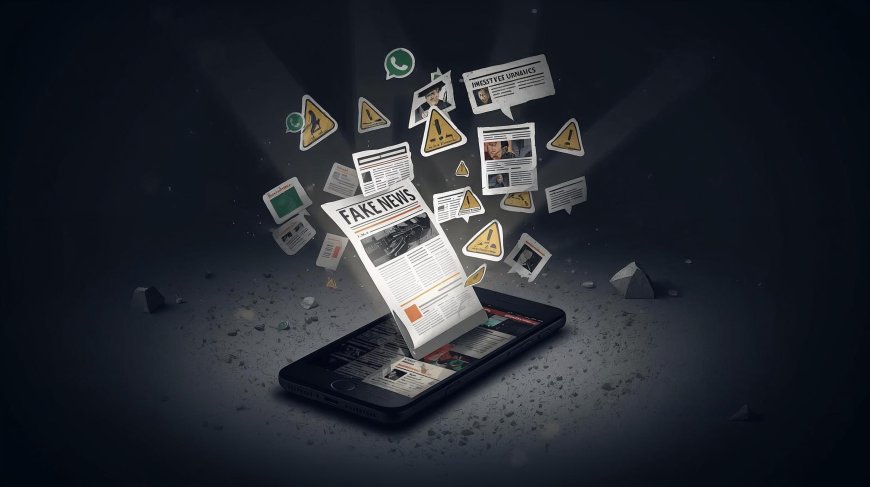
In the age of smartphones and instant sharing, news no longer waits for verification. It travels faster than truth. And sometimes, it leaves real damage behind.
This case study examines how a single piece of unverified information recently spread across Pakistani social media platforms, triggered panic, damaged reputations, and revealed how dangerously powerful misinformation has become.
A Story That Started With One Post
It began quietly.
Late one evening, a Facebook post appeared claiming that a major public service facility in Pakistan had been “secretly shut down due to a serious emergency.” The post included a blurred image, a voice note, and the words:
“My cousin works there. Don’t go out tomorrow. Share this to save lives.”
Within minutes, the post moved from a small Facebook group to WhatsApp. From WhatsApp, it reached TikTok videos. Screenshots hit X (Twitter). By morning, thousands of Pakistanis were searching Google, calling relatives, and canceling plans.
Yet there was one problem.
None of it was true.
No official notice. No emergency. No confirmation.
Just a claim, repeated until it felt real.
How It Exploded So Fast
Our review of the spread pattern shows four major accelerators:
1. Emotional Hook
The message used fear and urgency two emotions that disable critical thinking.
2. “Someone I Know” Technique
By saying “my cousin works there”, the post created false credibility, a common misinformation trick.
3. Voice Notes & Blurred Images
Audio clips and unclear photos feel “raw” and “inside,” even when fake.
4. Closed Networks
WhatsApp groups and private Facebook communities spread content without public fact-checking.
By the time mainstream clarification appeared, the rumor had already reached tens of thousands.
The Real World Consequences
This was not “just a rumor.”
Within hours:
• People avoided a public area unnecessarily
• Small nearby businesses reported customer drops
• Emergency helplines received panic calls
• A government department was forced into late-night damage control
• Trust in real news sources weakened further
In some cases, misinformation does not just mislead it disrupts society.
Why People Believed It
Our analysis highlights uncomfortable truths:
Speed beats accuracy
People shared before searching.
Familiar platforms create false safety
If it comes from a family group, it feels trustworthy.
Algorithms reward emotion, not truth
Anger, fear, and shock travel further than facts.
Digital literacy remains low
Many users cannot distinguish a claim from a confirmed report.
The Correction That Couldn’t Catch Up
When official clarifications were finally issued, they were calm, factual, and slow.
But fake news had already evolved:
• New versions
• New screenshots
• New voice notes
• New captions
This is a known misinformation pattern:
❝ By the time truth puts on its shoes, falsehood has already traveled halfway across the country. ❞
Key Lessons From This Case
1. Virality is not verification
High shares do not mean high truth.
2. “Forwarded many times” is a red flag, not proof
3. Panic is profitable in the attention economy
4. Silence from authorities creates space for rumors
5. Every user is now a publisher with responsibility
What Pakistan Must Learn
This case shows that Pakistan’s misinformation challenge is not only technological it is educational and cultural.
We need:
• Faster official digital responses
• News literacy in schools and universities
• Stronger fact-checking culture
• Responsible influencer practices
• Public awareness campaigns
Because the next viral falsehood may not just cause confusion.
It could cause real harm.
How Readers Can Protect Themselves
Before sharing:
• Search the headline on Google
• Check official sources
• Look for confirmation from major news outlets
• Be suspicious of “urgent” forwards
• Ask: Who benefits if I share this?
Final Thought
Fake news does not spread because people are stupid.
It spreads because it is designed to exploit emotion, trust, and speed.
This case study is not about one rumor.
It is about a digital environment where every click carries consequence.
Nation Bytes will continue to document and analyze the information war shaping our society.