
Punjab Outsourcing 4,500 More Schools to Private Sector
The provincial government kicks off Phase 3 of its massive plan to hand over thousands of public schools to private operators and NGOs.
 Abdul Raheem Qaisar
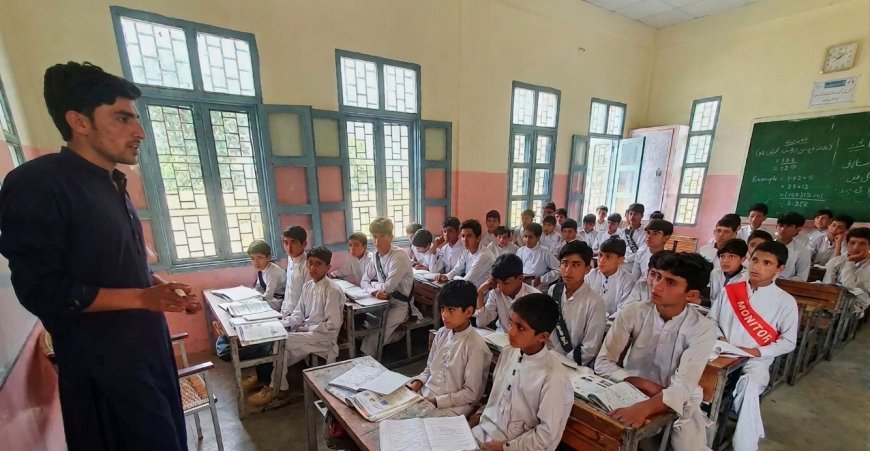
Punjab Education Department officially greenlights the third phase of its plan to transfer another 4,500 government schools to the private sector, stated by The Express Tribune. It’s a huge move that’s hitting the headlines just as the Punjab Education Foundation (PEF) wrapped up its initial application window, signaling a major shift in how the province handles its classrooms.
According to latest reports, whispers are getting louder that the government is rushing to offload these "low-performing" institutions to NGOs and private service providers to fix a broken system. From what some folks close to the situation are saying, the goal is to tackle the massive out-of-school children crisis and improve sagging infrastructure that the state just can't keep up with. It’s the latest development making the rounds in education circles and parent groups, even though the teachers’ unions are already pushing back hard. The idea is gaining traction fast among officials who argue that private management is the only way to save these schools from falling apart completely.
Details are still trickling out, but this specific phase is targeting roughly 2,735 to 4,500 schools where enrollment has been practically zero or the buildings are in total disrepair. Under the Public Schools Reorganization Program (PSRP), the government will pay a fixed per-student subsidy to the new operators instead of managing the heavy payroll and administration themselves. This follows a massive rollout last year where over 11,000 schools were already flipped to private hands. The plan is to eventually hit a total of 14,000 schools, which is why some are saying the traditional public school model in Punjab is basically being dismantled.
This whole thing is playing out while the Punjab government has been grinding through a serious budget crunch and trying to manage a student population that's exploding. It brings back memories of earlier Public-Private Partnership attempts that had mixed results, but this is on a scale we haven't seen before.
Officials are pushing back hard on any talk of "privatization" as a failure of the state. They insist the move is purely about enrollment and quality, ensuring that every child has a desk and a teacher. However, with unions threatening strikes and some reports suggesting that enrollment in previously outsourced schools hasn't actually improved, the possible future outcomes look like a high-stakes gamble for the Education Department. If this works, it could be a blueprint for the whole country; if it fails, a lot of kids might be left in the lurch.
Stay updated with the latest news here.