Finance Minister Defends IMF Report, Unveils Institutional and Digital Reforms
Aurangzeb rebuts claims of delaying the IMF governance report, outlines reform commitments, digitisation plans and climate-aligned economic measures in Senate.
 Ayesha Mir
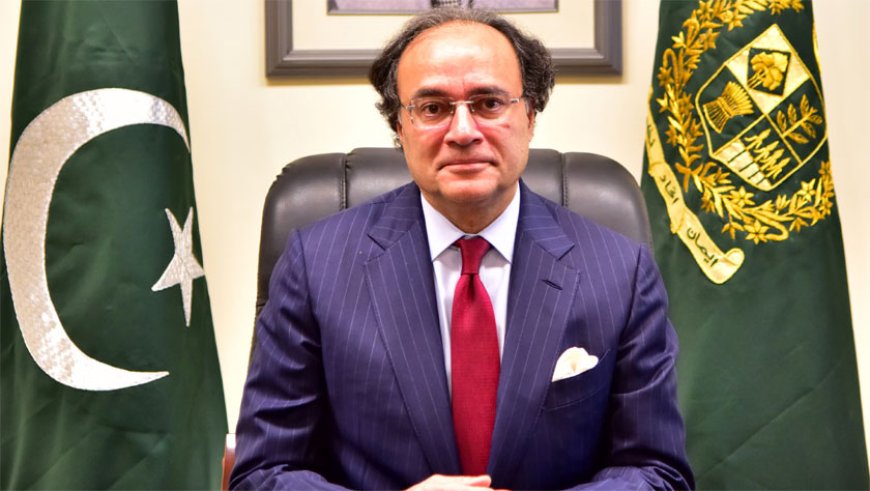
Finance Minister Muhammad Aurangzeb on Monday robustly dismissed allegations that the government delayed or attempted to withhold the IMF’s Governance and Corruption Diagnostic Assessment (GCDA) report, stating that the document went through a “rigorous, consultative review process.” His remarks came while winding up debate on a motion raised by Senator Kamran Murtaza, according to Dawn’s report.
Aurangzeb explained that the GCDA , which reviews seven governance areas, including judicial oversight and corruption — identifies key structural weaknesses and provides 15 institutional reform recommendations. Terming the report “a positive step,” he said the government had itself initiated and facilitated the assessment, as per the IMF’s published assessment.
The minister noted that nearly 100 meetings were held and over 30 institutions participated. “In the private sector, reports are circulated, inputs are taken, some points adopted, others not. This takes time. There was no reason for us to delay its publication,” he told the Upper House.
He rejected speculation that the IMF report was linked to recent audit observations from the Auditor General of Pakistan or a separate State Bank analysis, calling such claims “illogical,” reported Daily Times.
Reforms, Capacity Gaps and FBR Overhaul
Addressing additional concerns from senators, Aurangzeb endorsed calls for strengthening governance, enhancing professional capacity across ministries, and improving compensation structures. These issues, he said, were under active review by the Civil Service Reforms Committee chaired by Planning Minister Ahsan Iqbal, in which he also serves.
He supported a proposal for the Federal Board of Revenue (FBR) chairman to brief lawmakers on ongoing tax transformation initiatives , structured around people, processes and technology, noting that the same presentation had been shared with business bodies, overseas Pakistanis and development partners.
The minister reiterated that Prime Minister Shehbaz Sharif was directly overseeing Pakistan’s shift toward a “cashless and digital economy,” with clear milestones set for December 2025, June 2026 and December 2026.
Climate and Digital Finance Commitments
Aurangzeb also stressed that climate change represents “an urgent economic reality” for Pakistan. He reaffirmed the government’s commitment to sustainable finance, establishing green taxonomy frameworks and promoting climate-aligned disclosures. He added that Pakistan was taking a proactive regulatory approach toward digital assets and emerging technologies to integrate innovation into a transparent, compliant financial ecosystem.
For more, visit latest news nation bytes.