
Inside the Epstein Files: What They Are, What’s in Them, and Why They Matter
A massive trove of government documents tied to Jeffrey Epstein has been released, revealing emails, photos, videos and communications linked to the disgraced financier and many prominent figures.
 Abdul Raheem Qaisar
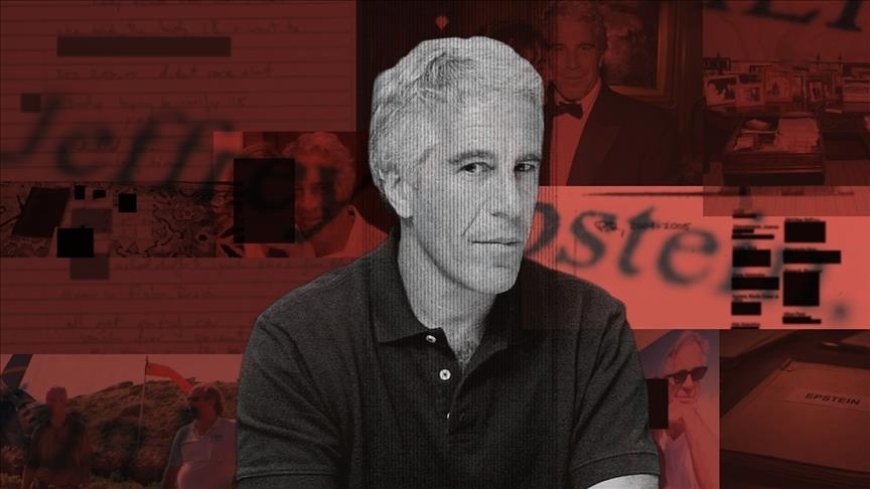
What Are the “Epstein Files”?
The Epstein files refer to a huge collection of government records, evidence, communications, and investigative materials related to Jeffrey Epstein, the U.S. financier who was convicted of sex crimes and died in custody in 2019 while awaiting trial on federal sex-trafficking charges.
They are official files held by the U.S. Department of Justice (DOJ) and Federal Bureau of Investigation (FBI) that cover decades of investigation into Epstein’s activities, his network, and the people connected to him, everything from legal documents and emails to images, flight logs and interview transcripts.
These files were traditionally sealed or not publicly accessible, meaning the general public, journalists, and many lawmakers could not view them.
Why were the Epstein Files Released?
In November 2025, the United States Congress passed the Epstein Files Transparency Act, a law requiring the DOJ to make all unclassified records related to Epstein publicly available within 30 days of enactment. The law was supported by lawmakers from both parties who said it was necessary for public transparency on a case that involved widespread sexual abuse, elite influence and justice system decisions.
The Act mandates that records including investigative files, travel logs, financial records, communications, and internal DOJ documents be searchable and accessible online, while allowing for redactions only where necessary to protect victim privacy, national security or ongoing investigations.
How Much Has Been Released, and What’s Still Missing?
-
On 30 January 2026, the DOJ published a massive batch of files, totaling over 3–3.5 million pages, 180,000 images, and 2,000 videos.
-
These documents include emails, photographs, court records, search warrants, flight and travel logs, text messages, and investigative reports tied to Epstein’s long history of abuse and legal proceedings.
However:
-
Critics, including lawmakers and victim advocates, argue many documents are still heavily redacted or withheld, and more material may exist beyond what has been published.
-
The redaction process itself has drawn fire: victims’ names and sensitive details have sometimes appeared unredacted, even as other content is deeply obscured or removed.
So while the publicly posted files represent an enormous amount of material, attorneys and Congress members say more files are still under review or currently restricted.
What’s Inside the Epstein Files?
The documents cover a wide array of material related to Epstein’s life, crimes, investigations, and connections:
1. Investigative Records and Legal Evidence
Included are court filings, grand jury transcripts from prior cases, police reports, and FBI interview notes. These provide insight into how Epstein’s network of abuse was investigated over years.
2. Communications; Emails and Texts
Many emails and messages from Epstein’s accounts are part of the release. These include exchanges with business leaders, political figures, diplomats, and public personalities.
3. Multimedia; Photos and Videos
Hundreds of images and videos, including scenes from Epstein’s properties and interactions with various individuals, are included. Some images have been controversial due to privacy concerns.
4. Flight Logs, Travel and Travel-Related Records
The files list flight manifests, travel itineraries and logs showing Epstein’s movements and those who traveled with him on his aircraft.
5. Financial Records and Internal Government Communication
Banking and transaction records, internal DOJ communication on Epstein’s prosecutions and plea deals, and documents showing government decisions and delays are part of the trove.
What Has the Release Revealed So Far?
Although many parts remain redacted or yet unpublished, the files have already shown:
-
Communications with powerful public figures, business leaders and celebrities, including emails and messages that show social connections or business dialogue, not criminal activity.
-
Versions of FBI investigative notes and tips, including some items about allegations against high-profile individuals.
-
Discussions between Epstein and associates concerning travel, social gatherings, and in some cases, reputation management.
Despite the amount of information, review teams that have looked at the files say there is no direct evidence of a formal “blackmail list” or conclusive proof that powerful figures were criminally involved in Epstein’s sex abuse network simply because they appear in the files, but many interactions raise questions and prompt further inquiry.
Criticism and Controversy
The release has not been smooth:
-
Privacy concerns: Some personally identifying information and images of known victims have been unintentionally exposed in the files, prompting lawyers for survivors to call for removal or better redaction processes.
-
Incomplete compliance: Despite legal deadlines, lawmakers have pushed back, saying the DOJ has not fully complied with the Transparency Act and may be holding back documents.
-
Public access issues: Technical problems and content warnings have made it difficult for some users to view parts of the archive online.
Who Is Mentioned in the Epstein Files?
The following people are among those named in the latest release. Being included in the files does not mean someone committed a crime, but the documents reveal social connections, correspondence, and meetings that have drawn public attention.
Elon Musk
The files include email correspondence between Epstein and Musk about travel plans Epstein seemed to be organising.
In November 2012, Musk wrote: “What day/night will be the wildest party on your island?”
In December 2012, he added he wanted to “hit the party scene” and that a “peaceful island experience” was not what he wanted.
Musk later said the emails might be used to “smear my name,” but stressed he was more concerned about prosecuting those who committed serious crimes with Epstein.
Bill Gates
Two emails dated 18 July 2013 appear to be written as if from Epstein to Gates, but it is unclear if they were genuine or ever sent.
One reads like a resignation letter from the Bill and Melinda Gates Foundation and claims Gates had sought medicine for the “consequences of sex with Russian girls.”
The other alleges Gates tried to hide a sexually transmitted infection from his then-wife.
Melinda French Gates told NPR the documents revived painful memories and said she hoped there would be “justice for those now-women.”
A Gates spokesperson called the claims “absurd and completely false.”
Donald Trump
Trump’s name appears hundreds of times in the files. They include an FBI list of allegations made against him via a national tip line.
Many items are unverified tips and include claims about Trump, Epstein and other public figures.
Trump denies wrongdoing and says he cut ties with Epstein decades ago.
Prince Andrew
The files contain photographs showing Prince Andrew kneeling over a woman lying on the ground, with one image showing him touching her stomach. Another photo shows him looking directly at the camera.
No context is given and the images do not identify the woman or location.
The BBC has approached Prince Andrew for comment. He has previously denied wrongdoing.
Richard Branson
Branson’s name appears hundreds of times. One 2013 exchange shows Epstein thanking Branson for hospitality and PR advice.
Branson replied: “Any time you’re in the area would love to see you. As long as you bring your harem!”
Virgin Group said the term “harem” referred to three adult members of Epstein’s staff.
Virgin said Branson’s contact with Epstein was limited to a few business or group settings, including a charity tennis event.
After due diligence revealed allegations against Epstein, Virgin Unite refused his donation and Branson and his wife cut off contact.
Sarah Ferguson
Ferguson appears in multiple emails, including during Epstein’s house arrest.
One email from an account believed to belong to Epstein says: “I think Fergie can now say, I am not a pedo.”
Another April 2009 email describes Epstein as a “legend” and “spectacular and special friend.”
The emails do not indicate wrongdoing. The BBC has contacted Ferguson for comment.
Lord Peter Mandelson
Bank statements in the files suggest Epstein paid $75,000 to accounts connected to Mandelson and his partner Reinaldo Avila da Silva.
The Metropolitan Police has opened an investigation into Mandelson over claims he passed market-sensitive information to Epstein.
Emails show da Silva requesting help in 2009 and Epstein replying: “I will wire your loan amount immediately.”
Mandelson has said he will step down from the House of Lords and denied wrongdoing, saying he learned the truth about Epstein after his death.
Steve Bannon
The files contain thousands of messages between Epstein and former Trump adviser Steve Bannon, mostly from 2018–2019.
One exchange shows Bannon advising Epstein on rebuilding his reputation, saying they needed to “push back on the lies” and “rebuild your image as a philanthropist.”
Bannon did not respond to BBC requests for comment.
Miroslav Lajčák
Texts from October 2018 show the then-Slovak foreign minister chatting with Epstein about girls and “games.”
Epstein offered girls, and Lajčák replied: “Why don't you invite me for these games? I would take the 'MI' girl.”
After the release, Lajčák resigned as Slovakia’s national security adviser. He is not accused of wrongdoing.
Howard Lutnick
Emails show US Commerce Secretary Howard Lutnick planning a visit to Epstein’s private island with his family.
Lutnick’s wife emailed Epstein’s assistant in December 2012 saying they looked forward to visiting and wanted to join for lunch.
The Commerce Department said Lutnick had limited interactions with Epstein and has never been accused of wrongdoing.
Larry Summers
The documents reference meetings and dinners between Summers and Epstein.
In 2017 emails, Epstein and Summers joked about Trump, with Epstein calling him “dumb.”
After earlier files named him, Summers said he regretted continuing contact and resigned from multiple roles.
Steve Tisch
New York Giants co-owner Steve Tisch asked Epstein about a woman he met at Epstein’s home, asking whether she was a professional or “civilian.”
Epstein described another woman as “tahitian… exotic” and said he had a “present” for Tisch.
Tisch said he had a brief association but never visited Epstein’s island.
Brett Ratner
Film director Brett Ratner appears in a photo sitting with Epstein and two women.
The BBC has contacted his representatives. There is no evidence of wrongdoing in the files.
Peter Attia
Doctor and media figure Peter Attia exchanged hundreds of emails with Epstein.
The messages include crude sexual jokes and discussion of the Miami Herald story identifying victims.
Attia said he was never involved in criminal activity and never visited Epstein’s island or plane.
Casey Wasserman
The Olympics official sent flirtatious emails to Ghislaine Maxwell in 2003, asking how he could see her in “a tight leather outfit.”
Wasserman said he regretted the messages and that they occurred before Maxwell’s crimes were known.
Sergey Brin
Google co-founder Sergey Brin visited Epstein’s island and planned dinners at his New York home.
He corresponded with Maxwell, who invited him to Epstein-hosted events.
The BBC contacted Google for comment. There is no suggestion of wrongdoing.
Ehud Barak
Former Israeli prime minister Ehud Barak appears in the files with several exchanges after Epstein’s 2008 conviction.
One email discusses Barak staying at Epstein’s New York home in 2017.
Barak said he regularly spoke with Epstein but never saw or participated in inappropriate behavior.
Why the Epstein Files Matter
The Epstein files offer one of the most extensive public disclosures of investigative material tied to a major sex-trafficking case involving wealth, power, and possible systemic failures.
While critics point to redaction and privacy issues, the files are a landmark step toward transparency and accountability, and they continue to raise questions about who Epstein knew, and how far his influence reached.
Stay updated with the latest news here.