Accelerating the Atomic Race
Striking Iranian nuclear sites might delay technical progress, but the political fallout is guaranteed to drive a regional rush for the bomb.
 Abdul Raheem Qaisar
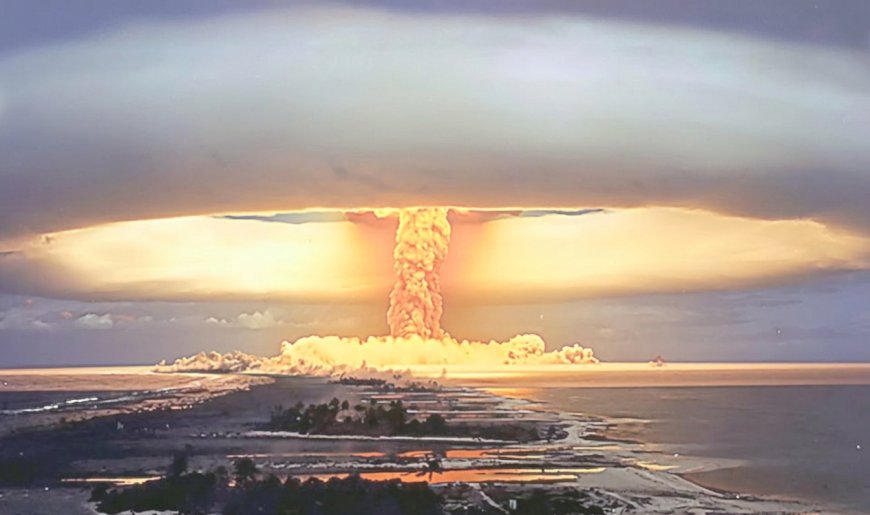
If you bomb Iran, Iran is going to almost certainly chuck out international inspectors and make a dash for the bomb.
In June 1981, Israeli jets destroyed Iraq’s Osirak nuclear reactor in a surprise dawn raid. The world cheered a bold blow against proliferation. Saddam Hussein’s regime, however, swore revenge. It buried its programme deeper and pursued other weapons with fresh fury. History delivered its verdict quietly: pre-emptive strikes rarely kill the will. They often sharpen it.
Today, the pattern repeats on a larger canvas. In the Iran war that erupted on 28 February 2026, US and Israeli forces have hammered Natanz, Fordow and Isfahan. Nuclear halls lie in ruins. Missiles have shredded centrifuge halls and research labs. Leaders in Washington and Jerusalem declare kinetic counter-proliferation a triumph. Diplomacy failed, they say. Bombs succeeded where talks never could.
Yet the very opposite now unfolds. Iranian hardliners, once cautious, speak openly of the bomb. The death of Supreme Leader Khamenei has only emboldened them. Revolutionary Guards commanders argue that survival demands a nuclear shield. Neighbouring states watch nervously. Saudi Arabia, Egypt and Turkey quietly dust off old contingency plans. The lesson is stark: destroy the reactor, and you may create ten secret ones.
Reuters published an article on 3 March 2026 stating that Russian Foreign Minister Sergei Lavrov warned that the war “could result in the very outcome they were seeking to prevent”. He noted that “forces will emerge in Iran in favour of doing exactly what the Americans want to avoid, acquiring a nuclear bomb. Because the U.S. doesn’t attack those who have nuclear bombs.” Lavrov added that Arab nations could join the race, risking that “the nuclear proliferation problem will begin to spiral out of control”.
Proponents of the strikes insist otherwise. They point to North Korea’s fate avoided. They argue that months of pounding have set Tehran back years. Enrichment halls are craters. Stockpiles of near-weapons-grade uranium are scattered or buried. The regime’s missile programme reels. In their view, Strikes Fuel Proliferation is a myth. Force has done what sanctions and JCPOA never managed.
The counter-argument, however, carries heavier weight. Striking visible sites does not erase knowledge. Iranian scientists have already dispersed. Hardliners now dominate the debate inside Tehran. They cite a simple truth: the United States attacks the unarmed. It leaves the nuclear-armed alone. That logic travels fast across the region.
Saudi Crown Prince Mohammed bin Salman once hinted at matching any Iranian bomb. Egypt’s military planners have studied the option for decades. Turkey under Erdogan has flirted with the idea in private. Each new crater in Iran adds urgency to their calculations. The Non-Proliferation Treaty, already fraying, risks becoming a dead letter. When one state is bombed for suspected ambitions, others conclude that only the bomb itself brings safety.
History offers no comfort. Israel’s 1981 Osirak raid delayed Iraq but did not end its appetite. India and Pakistan raced ahead despite sanctions and veiled threats. North Korea endured isolation and still crossed the threshold. Each case shows the same truth: military pressure hardens resolve. It does not dissolve it.
The current campaign repeats the error on steroids. Civilian deaths mount. Infrastructure crumbles. Iranian pride, already wounded, now burns with fresh rage. Hardliners frame the Iran war as proof that only a nuclear deterrent will deter future attacks. Young officers who once debated restraint now demand urgency. The window for diplomacy has not merely closed. It has been welded shut by bunker-busters.
Short-term metrics look impressive. Enrichment capacity lies in ruins. Timelines stretch. Yet long-term consequences loom larger. A nuclear Iran may arrive later, but with fiercer determination. Its neighbours may follow sooner than expected. The Middle East risks a cascade no treaty can stop. Nuclear proliferation will not slow. It will accelerate.
Critics once called diplomacy naive. They praised kinetic counter-proliferation as realistic. The irony now stares back. The strikes meant to bury the threat have instead sown their seeds across a volatile region. What began as a surgical campaign has become a proliferation accelerant.
The region’s future grows darker with every sortie. Hardliners in Tehran gain ground daily. Gulf monarchies hedge their bets with quiet research programmes. Global powers issue statements while the arms race gains momentum. The very goal of the operation, a nuclear-free Middle East, slips further away.
Strikes Fuel Proliferation was never the intended headline. Yet it may prove the only accurate one. Diplomacy offered a slow, imperfect path. Bombs have chosen the faster, deadlier route. The Middle East now stands at the edge of a new nuclear age, born not in secret labs but in the smoke of precision-guided munitions.
Is Saudi Arabia the next to cross the threshold?
Read more here.