Elon Musk Aims to Build AI Data Centers in Space
Elon Musk is merging SpaceX and xAI to pioneer space-based data centers, aiming to revolutionize AI processing by moving massive hardware into orbit.
 Abdul Raheem Qaisar
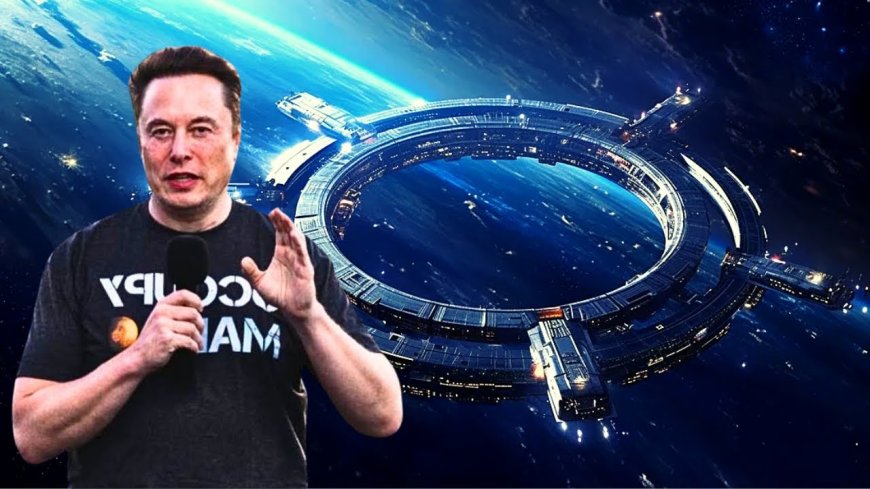
Elon Musk said a primary reason for merging SpaceX with his artificial intelligence startup, xAI, is to more effectively build “orbital data centers.” That’s for a far-off future. For now, xAI has a much more pressing need: cash.
Musk estimated that “within 2 to 3 years, the lowest cost way to generate AI compute will be in space.” But xAI requires immense amounts of money to finance its massive infrastructure build out as the three-year-old company tries to catch up to Google, OpenAI, and Anthropic in the booming generative AI market.
Capitalizing on the Muskonomy
SpaceX, which is reportedly aiming to go public this year in what could be a record-setting IPO, may represent Musk’s clearest path to landing that capital. The company is looking to raise up to $75 billion at a valuation as high as $1.75 trillion, according to Reuters.
A major key to SpaceX’s growth is Starlink, its satellite internet service, which has around 10,000 satellites in orbit today and roughly 10 million customers. It recently received authorization from the Federal Communications Commission to put another 7,500 satellites into orbit.
The logistical details of the news suggest that folding xAI into SpaceX allows Musk to capitalize on investors’ insatiable appetite for AI holdings, while also securing the AI company’s financial position despite its mounting losses. According to a report from The Information late Monday, xAI has told investors that it burned through significant capital through the first nine months of 2025.
Tim Farrar, president of satellite and telecom industry research firm TMF Associates, said SpaceX can’t put that kind of money to work towards its existing business because there are only so many rocket launches available each year. In early January, xAI closed a major funding round at a valuation that has now jumped following the all-stock merger that valued the combined entity at $1.25 trillion in February, per Bloomberg.
A Legacy of Intertwined Ventures
Looking at the historical background, Musk is moving fast, and he likely has the backing of a loyal band of investors who have a long history of supporting his intermingling of resources. In 2016, Tesla acquired SolarCity for $2.6 billion, rescuing it from a looming liquidity crunch. Before the merger, Musk was a key investor in the solar business and served as chairman of the company.
During his leveraged buyout of Twitter (which later became X) in 2022, Musk sold billions of dollars worth of his Tesla shares to finance the deal. He also tapped dozens of employees from SpaceX, Tesla, and The Boring Co. to help him with the takeover and to make sweeping changes to the platform.
At Tesla, Musk has engaged in a number of related party transactions with SpaceX and, more recently, xAI. For example, the automaker relied on SpaceX to develop a special alloy for its Cybertruck. In 2025, Tesla sold its giant backup batteries called Megapacks to xAI to help power data infrastructure being built out around Memphis, Tennessee, according to CNBC.
Political Influence and Future Risks
The possible future outcomes for this "orbital" ambition rely heavily on the political and financial stability of the "Muskonomy." While Musk still has three years left of a second Trump administration, he may have only a small window of unified Republican control, with the mid-term elections taking place in nine months.
Of particular importance to Musk is the recent installation of his business associate Jared Isaacman as the head of NASA. Isaacman has supported speeding up initiatives that would expand the agency’s contracts with SpaceX. At the FCC, Chairman Brendan Carr has been a vocal proponent of SpaceX’s Starlink.
However, if the technical hurdles of cooling and powering supercomputers in vacuum prove too costly, or if the market’s enthusiasm for AI wanes, the entire structure could be at risk. Farrar said that Musk’s biggest fans are willing to support the tangled web of transactions because they understand the symbolic importance of keeping his entire portfolio strong. “The whole thing relies on confidence in him,” Farrar said. “If any piece of his empire was to fall, it would undermine everything.”
Stay updated with the latest news here.