River Blindness Disease: How Merck’s Mectizan Donation Program Helped Save Millions of Lives
River blindness is a devastating parasitic disease causing severe itching and blindness. Discover how Merck’s Mectizan Donation Program transformed global health and helped save millions of lives worldwide.
 Admin
Admin
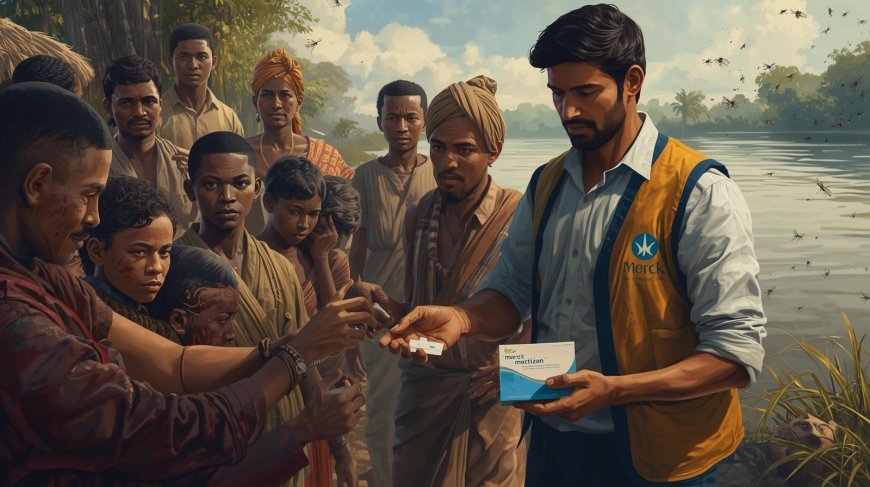
For centuries, river blindness silently destroyed lives across some of the world’s poorest regions. Known medically as onchocerciasis, the disease caused unbearable itching, severe skin damage, social stigma, and in many cases, permanent blindness. Entire communities were forced to abandon fertile land near rivers because of the constant threat posed by infected black-flies. Economic productivity declined, education suffered, and poverty deepened.
Today, river blindness stands as one of the strongest examples of how science, long-term commitment, and global partnerships can turn the tide against a neglected disease. At the center of this transformation is Merck & Co., Inc. (MSD) and its historic Mectizan® Donation Program, one of the longest-running and most impactful pharmaceutical donation initiatives in global health history.
Understanding River Blindness
River blindness is caused by a parasitic worm called Onchocerca volvulus. The parasite is transmitted to humans through repeated bites from infected black-flies that breed near fast flowing rivers and streams. Once inside the body, the worms mature and produce thousands of microscopic larvae, known as microfilariae, which migrate through the skin and eyes.
It is not the adult worms but these migrating larvae that cause the devastating symptoms: relentless itching, thickened and discolored skin, visual impairment, and ultimately irreversible blindness. In heavily affected areas, river blindness became one of the leading infectious causes of preventable blindness.
Before modern treatment, the disease affected tens of millions of people across sub-Saharan Africa, parts of Latin America, and the Middle East. Communities lost their workforce, children dropped out of school to care for blind relatives, and fertile agricultural land was abandoned, reinforcing long-term poverty.
Life Before Treatment
Prior to the 1980s, there was no safe, effective, and scalable drug to treat river blindness. Control efforts focused mainly on spraying insecticides to reduce blackfly populations. While partially effective, these campaigns were expensive, logistically complex, and difficult to sustain over vast rural territories.
The absence of a medical solution meant that for generations, river blindness remained largely unchecked. In many regions, blindness was considered an unavoidable fate rather than a preventable condition.
The Scientific Breakthrough
The turning point came when researchers working with Merck identified ivermectin, an antiparasitic compound, as a potential treatment. Clinical research demonstrated that ivermectin could safely kill the microfilariae responsible for the disease’s symptoms and transmission.
In 1987, ivermectin was approved for human use against onchocerciasis under the brand name Mectizan®. A single oral dose, taken once or twice a year, was shown to dramatically reduce parasite levels, relieve suffering, and prevent progression to blindness.
But one major problem remained: the people who needed the drug most could not afford it.
A Decision That Changed Global Health
Rather than commercializing Mectizan in the traditional way, Merck made an unprecedented decision. The company pledged that it would donate Mectizan free of charge, to everyone who needed it, for as long as needed.
This commitment led to the creation of the Mectizan Donation Program (MDP), established to coordinate global distribution in partnership with the World Health Organization, ministries of health, non-governmental organizations, and local community networks.
This was not a short-term campaign. It was a promise without an end date.
How the Program Works
The success of the Mectizan Donation Program lies in its community-centered approach. Instead of relying only on hospitals, the strategy focused on mass drug administration delivered directly in villages.
Local volunteers, known as community drug distributors, were trained to organize treatment days, determine correct dosing, educate neighbors, and maintain coverage year after year. This approach, often called community directed treatment, empowered villages to take ownership of their own health.
In many regions, Mectizan distribution became the backbone of broader public-health outreach, helping to build trust, improve disease surveillance, and strengthen rural healthcare delivery.
Expansion Beyond River Blindness
As the program matured, its impact extended beyond onchocerciasis. In 1998, Merck expanded its donation commitment to support the elimination of lymphatic filariasis, another parasitic disease that causes severe swelling, disability, and stigma.
Over time, the Mectizan Donation Program became a central pillar of the global neglected tropical disease movement, supporting integrated strategies that target multiple diseases at once.
Global Impact and Milestones
Over nearly four decades, the scale of the Mectizan Donation Program has been extraordinary. Billions of treatments have been delivered across more than 60 countries. Entire regions that were once hotspots of infection now report minimal or no transmission.
Several countries in Latin America have been officially verified as having eliminated river blindness. Even more significantly, recent milestones in Africa the continent that carried the heaviest burden show that elimination is not only possible, but achievable.
The benefits extend far beyond medical statistics. Formerly abandoned farmland has been reclaimed. Children remain in school. Adults remain productive. The stigma associated with disfiguring skin disease and blindness has diminished. Communities once trapped by disease now experience renewed economic and social stability.
Why This Case Study Matters
The fight against river blindness reshaped how the world approaches neglected diseases. It demonstrated that:
-
Long-term corporate responsibility can transform global health outcomes.
-
Free access to essential medicine can be organized at massive scale.
-
Community-driven health programs can outperform traditional top-down models.
-
Disease elimination, not just control, is a realistic goal.
The Mectizan Donation Program is now widely regarded as a blueprint for public-private partnerships in global health.
Challenges Ahead
Despite historic success, the mission is not over. Some remote and conflict-affected regions remain difficult to reach. Continuous surveillance is required to prevent resurgence. Health systems must remain strong enough to detect and respond to new cases.
Sustained commitment from governments, global organizations, and Merck itself remains essential.
Conclusion
The story of river blindness is no longer only a story of suffering. It is a story of scientific innovation, ethical leadership, and global solidarity.
What began as a parasitic disease trapping communities in blindness and poverty has become one of the most inspiring examples of what coordinated global action can achieve. Through the Mectizan Donation Program, millions have been spared disability, economies have revived, and entire generations now face a future free from a disease that once defined their existence.
River blindness is being pushed toward history and this case stands as proof that even the most neglected diseases can be defeated when humanity chooses to act together.